

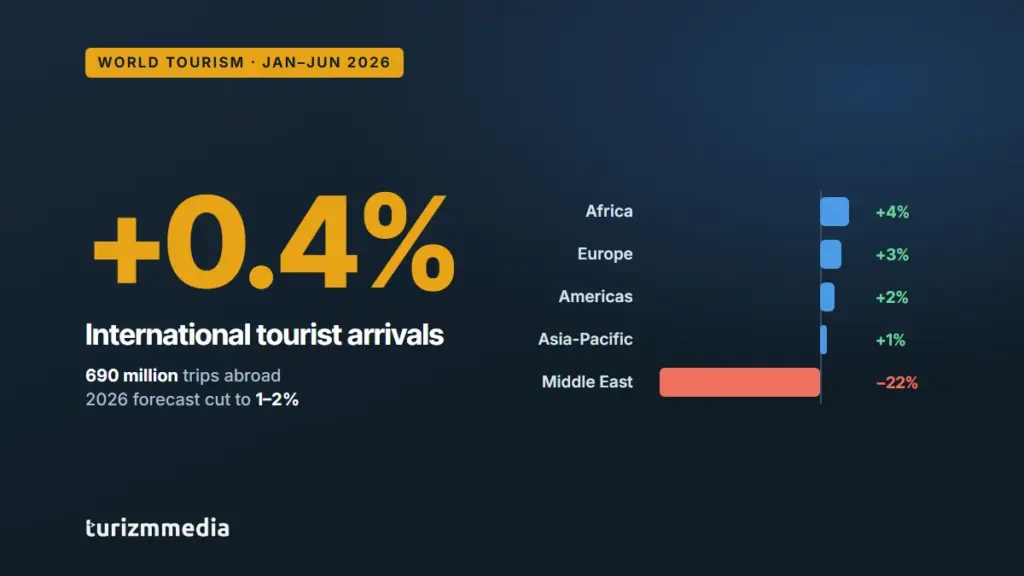
International tourism has nearly stopped growing. According to the latest World Tourism Barometer from UN Tourism, an estimated 690 million people travelled abroad between January and June 2026. That is only about 3 million more than a year earlier, an increase of just 0.4%.
A strong start, then a fall
The year began well: global arrivals rose 2% in the first quarter. The second quarter brought a 1% decline, including a 3% drop in April. Part of that was a calendar effect, as Easter started in March this year, but the conflict in the Middle East was the main factor.
June was weak too, with arrivals down 3% worldwide. Western Europe fell 6%, partly because of a heatwave in some destinations. South-East Asia lost 5% as Asian demand weakened, flights through the Middle East were disrupted and travel became more expensive.
Winners and losers
- Africa: +4%
- Europe: +3%
- Americas: +2%
- Asia and the Pacific: +1%
- Middle East: −22%
Air traffic in the Middle East began to recover in May and June after a ceasefire was announced, but consumer confidence has returned unevenly.
Forecast cut in half
UN Tourism now expects international arrivals to grow by only 1–2% in 2026, down from the 3–4% it forecast in January. How the year ends will depend on how long the conflict lasts and how it affects oil prices and inflation. Secretary-General Shaikha Al Nuwais described the sector’s growth as continuing but fragile.
The agency also expects travellers to keep looking for value for money and to choose trips closer to home or within their own country. For destinations like Azerbaijan, that means competing harder for regional visitors on price and convenience.